Production List System for Industrial Kitchens
The Origin: Built in the Heat of the Kitchen
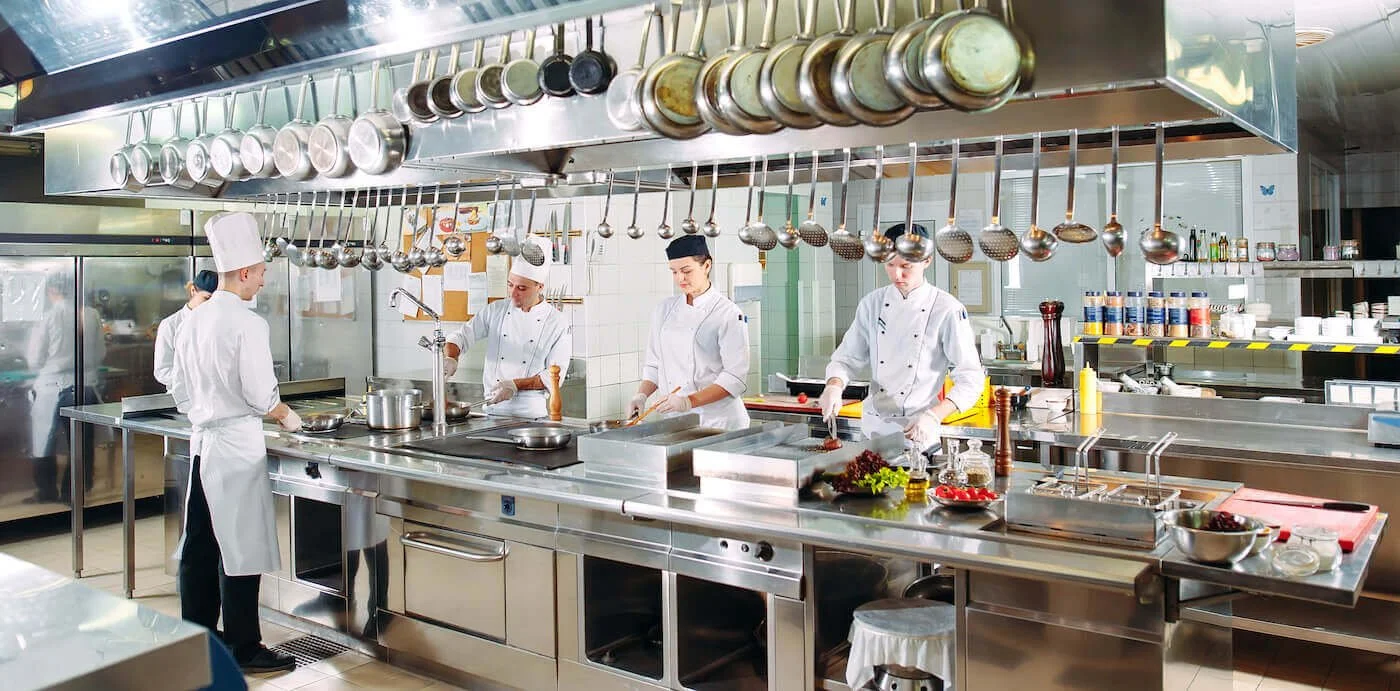
This wasn’t a system designed in an office; it was forged in the pressure cooker of a high-volume convention center kitchen. We were juggling a brutal menu mix: one day prepping concessions for 5000 cheerleaders, the next plating a 2,200-person three-course gala dinner, all while managing crew meals for hundreds, and executing pre-production for the next monster.
Traditional "off-the-shelf" catering software was too rigid for an Executive Chef who demanded total creative control over every event. To survive that level of scale without losing the culinary soul of the operation, we needed a tool that was as flexible as a handwritten note but as precise as a flight manual.
So, we built one.
The Challenge: "Mind-Reading" vs. Scaling
Before this system, the kitchen relied on "tribal knowledge"—handwritten scribbles on BEOs and cryptic doodles that required the Chef’s physical presence to decode. While this worked for a longsuffering, long-term team, it created a bottleneck that prevented the business from expanding or the Owner / Executive Chef from pursuing new ventures.
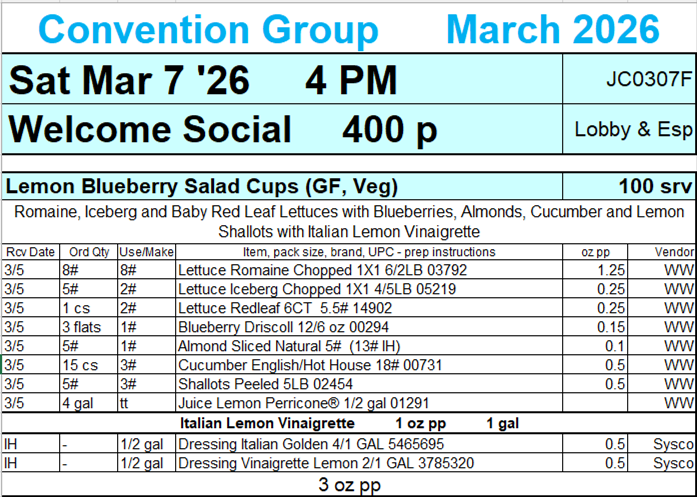
We needed something that new employees could learn to draft, something standardized, readable, and efficient. It needed to show receiving dates, product quantities to order vs quantities to make or use, product details like pack sizes and source vendors, inventory notes, cooking instructions, and all the other moving parts of a kitchen.
The Solution: A Dynamic Excel-Based Architecture
Together with the Executive Chef, I developed a proprietary, Excel-based production system designed for maximum flexibility and mathematical precision.
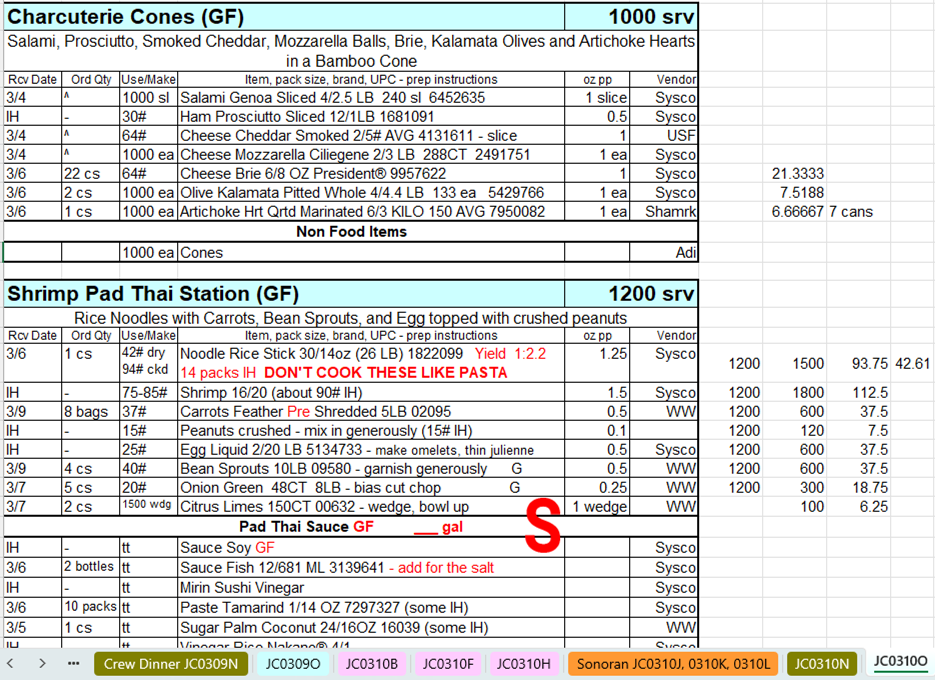
Integrated Food Math: Automated scaling of ingredients based on guest counts, eliminating manual calculation errors.
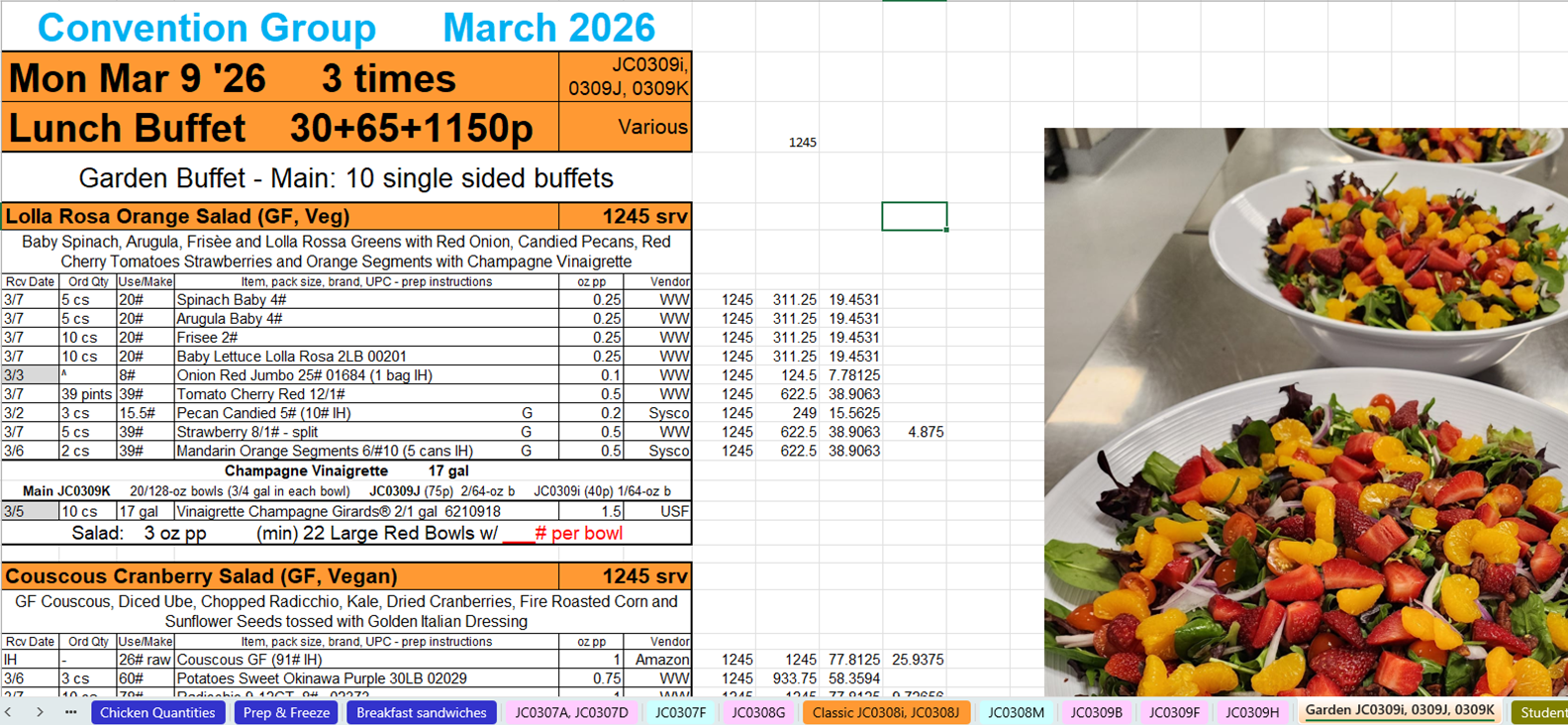
Visual & Technical Cues: Embedded imagery and specific prep instructions (cut types, FIFO rotation, and pan quantities) to ensure consistency.
Centralized Logistics: A single workbook manages an entire convention, using color-coded sheets to track individual parties, vendor sources, and delivery schedules.
Inventory Intelligence: Real-time tracking of ordered quantities versus prepared yields, including pack sizes and receiving dates.
The Result: Autonomy and Operational Freedom
The implementation of this system revolutionized the kitchen’s workflow. By transitioning from copying and whiting out previous iterations of a menu to a digital template library, the Executive Chef was able to successfully step away from daily operations. With the support of a central “scribe” (who was also the purchaser), sous chefs were trained to author their own lists, and prep cooks gained the autonomy to pull tasks directly from the board. This system didn't just organize the kitchen; it created a repeatable, professional framework that allowed the business to thrive, sometimes independently of its founder.
Production Lists In Action
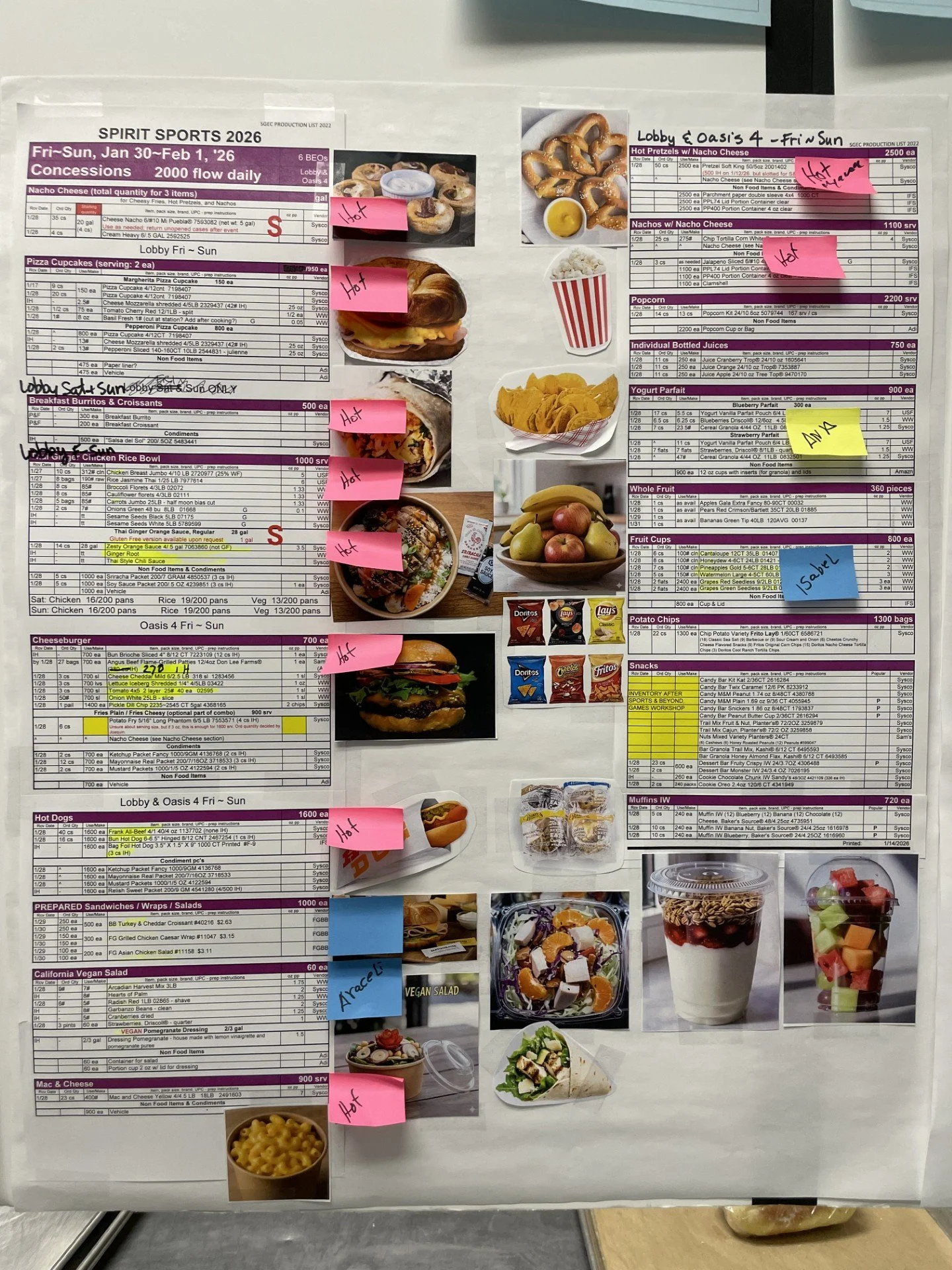
Production lists in action
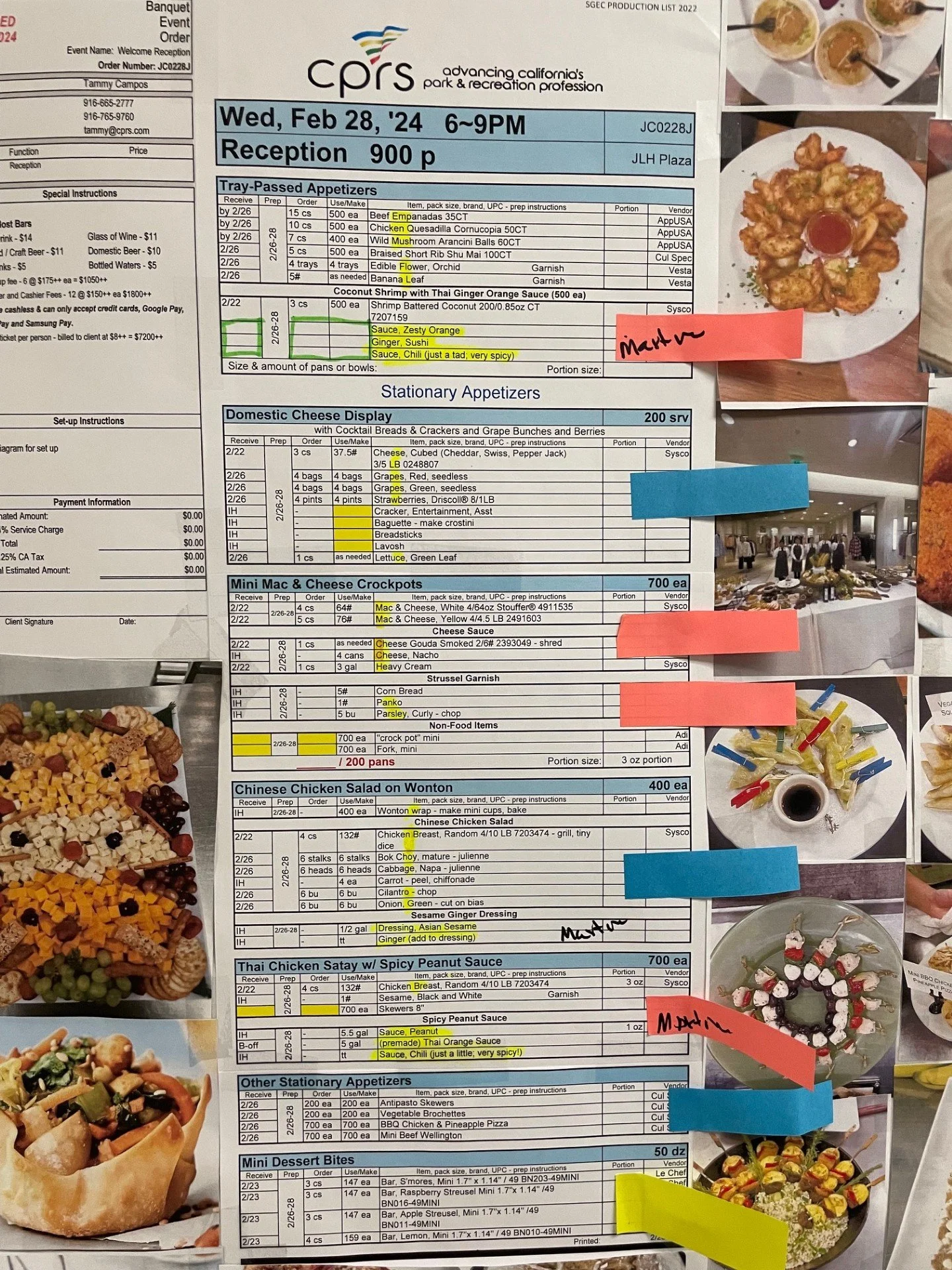
Production lists in action
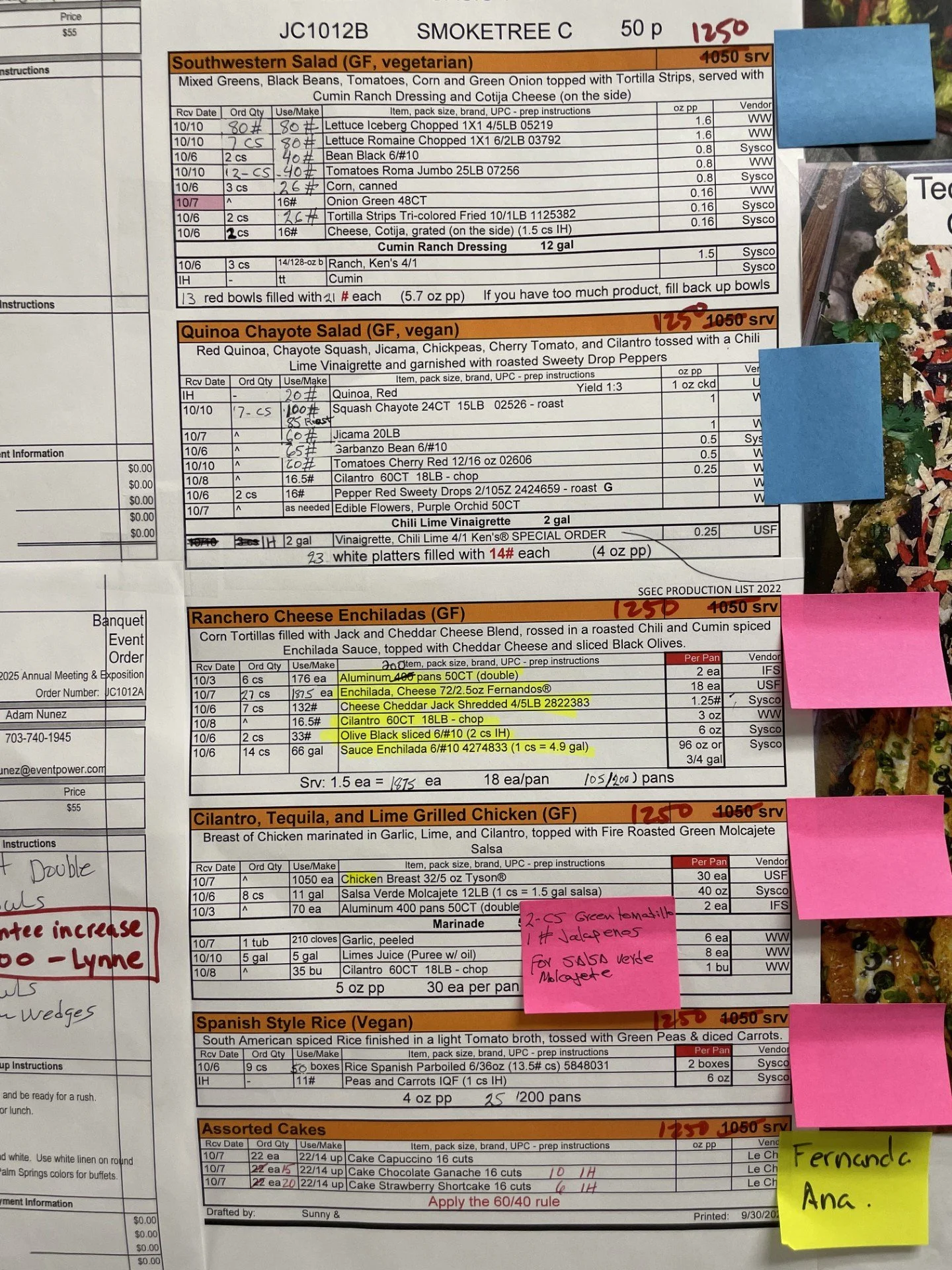
Production lists in action
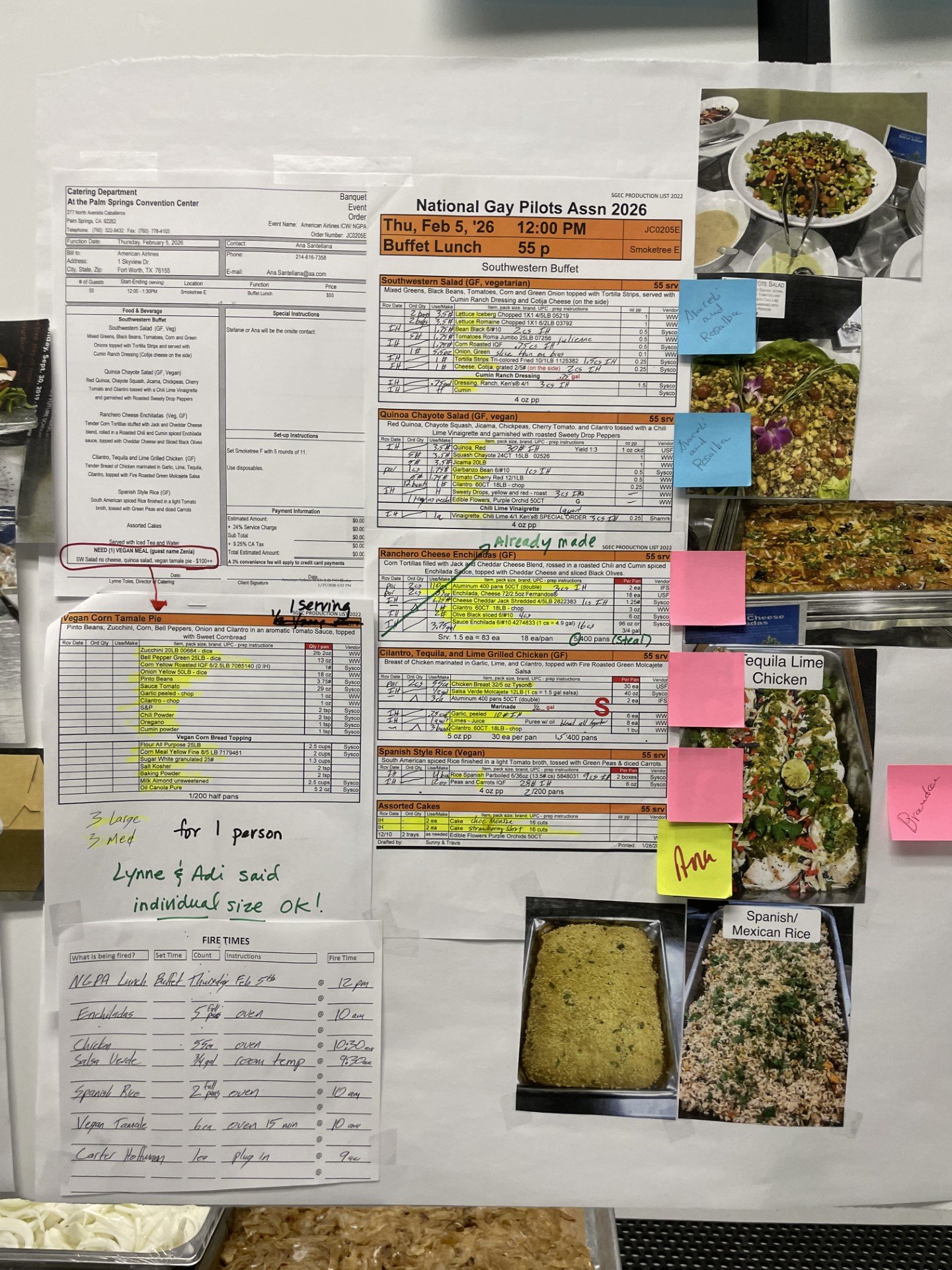
Production lists in action